Mangu-Ward’s statement resonates loudly amid the war in Iran and the diminishing congressional oversight of war-making and public policy more generally.
My focus at workfutures.io is on work, not war, but the way corporations are capitulating to the Trump administration's encroachment on how businesses operate must remain high on the agenda here.
I’ve been writing and speaking about the future of work for over 30 years. Along the way, I’ve consulted with and written for Microsoft, IBM, Google, Dell, Cisco, and dozens more. In 2007, I coined the term ‘hashtag’ (yes, hashtag), and many other terms that have shaped the way we think about work, like ‘work management’, ‘social tools’, ‘work media’, and others. If you want to help me continue my work, consider a paid subscription.
Post-Liberal Conservatism
Vice President JD Vance has embraced the worldview many are calling ‘post-liberal conservatism’, as Thomas Edsall described it1:
Vance described his current way of thinking relatively early on in his transition to MAGA loyalist, at a 2023 event honoring the post-liberal political theorist Patrick Deneen. “We on the right, on the sort of the post-liberal right, the new right,” Vance said, “we are really, really kidding ourselves about the weight of the challenge, and when we talk about changing the regime.”
The corrupting power of liberalism, Vance argued, has infected both the public and private sectors:
The way that lobbyists interact with bureaucrats, interact with corporations — there is no meaningful distinction between the public and the private sector in the American regime; it is all fused together. It is all melded together. It is all, in my view, very much aligned against the people who I represent in the state of Ohio
In fact, Vance continued, “the regime is the public and private sector. It’s the corporate C.E.O.s, it’s the HR professionals at Budweiser, and they are working together, not against one another, in a way that destroys the American common good.”
Vance and his ilk are committed to changing not just public policies or legislating new laws, but changing the culture of the American regime, including what business leaders are working toward, and who they work with to get there.
Edsall quotes Stephanie Slade of the libertarian magazine Reason as saying she
would sum up Vance’s view as follows: The left is willing to use all the power at its disposal — cultural as well as governmental — to impose its way of life on the American people, whether they like it or not, and so if conservatives are to have any hope of saving the country from left-wing tyranny, they must be willing to respond in kind.
This includes putting pressure on business leaders to support the post-liberal right’s agenda. So, out with Diversity, Equity, and Inclusion. Out with secular liberalism. Out with corporate social responsibility.
That may involve dislodging a managerial elite characterized by post-liberal political theorist Patrick Deneen as ‘a new aristocracy that has enjoyed inherited privileges, prescribed economic roles and fixed social positions’.
Deneen expanded on that in Why Liberalism Failed:
A political philosophy that was launched to foster greater equity, defend a pluralist tapestry of different cultures and beliefs, protect human dignity and, of course, expand liberty, in practice generates titanic inequality, enforces uniformity and homogeneity, fosters material and spiritual degradation and undermines freedom.
So, Vance and his cadre would like a new post-liberal managerial elite to take over American business, and to expunge any vestiges of liberal idealism and humanism.
Ellie (at Oceandrops) makes that argument that Japan has fallen into late-stage capitalism, and the US is following. She describes Japan’s ‘lost decade’ — the decades following the 1991 financial crisis there:
In 1991, the Bank of Japan tightened monetary policy, cooling speculation which triggered an enormous crash. Asset values plunged by over 80%, and the banks were left with bad loans. This event marked the beginning of the Lost Decade, a period of incredible stagnation that could be better called the Lost Decades — as it plagues the country to this day. Wages peaked in ‘97, the Yen depreciated, and household purchases have flatlined.
We have our own story to tell:
America’s “Lost Decade” started with the housing crisis of 2008, where subprime mortgages and the predatory financialization of consumer debt liquified the entire financial system.
Where the Japanese response to the financial crisis was slow and fragmented, the Americans aggressively flooded the economy with liquidity. TARP bailouts, quantitative easing, zero interest rates, and forced bank recapitalization helped Wall Street recover but not the ordinary American. Asset inflation benefited the rich, and everyone else was handed incredible wealth inequality.
And the social consequences in Japan have been many, and are echoing in America:
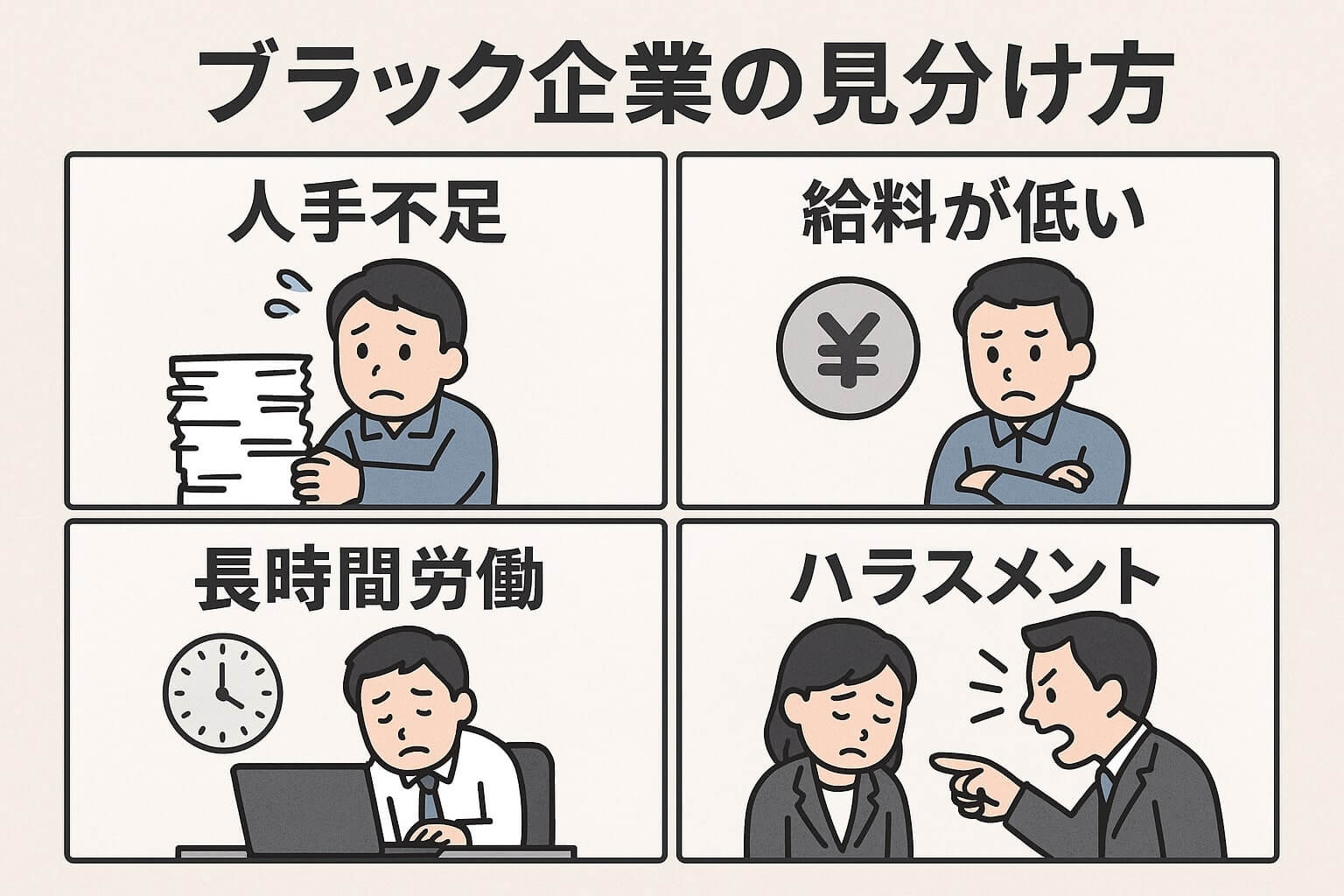
Japan has a term for “evil jobs” — ブラック企業 (Black Kigyo or Black Labor). These jobs enforce extreme overtime, unpaid labor disguised as “service overtime”, surveillance, and quotas. Workers internalize this obedience and labor abuse because the alternative is unemployment and social stigma.
(Translation) How to spot a Black Company: Understaffing, low pay, long hours, harassment.
Black kigyo companies comprise a significant portion of entry-level work, drastically altering working norms for young adults.
American analogues are now visible too. This November, the private sector lost 32,000 jobs.2 The pandemic-era white collar work bubble popped, and popped hard. Hiring is flat for the Class of 20263 as layoffs rise and AI takes over menial white collar labor. The American worker is being pushed into gig-worker exploitation, and human dignity violating work conditions. Even industries that were typically seen as relatively stable — healthcare and education — are experiencing major worker burnout.
Overwork is normalized. Karoshi (”death by overwork”) became a recognized cause of death in the 1980s. This includes heart attacks, strokes, and suicides linked to workplace abuses and poor life quality. If you visit Japan you may see signs of this normalized absurdity: salarymen collapsed in random public locations, Konbini selling shower-in-a-can, and people getting most of their calories at vending machines and subway station kissaten.
Asia Minute: Helping and Shaming Japan’s Drunk Salarymen | Hawai’i Public Radio
The average American, unfamiliar with Japanese social norms or cultural history, likely thinks this is some reflection of premodern Japanese values or ritual suicide traditions. It’s not.
Karoshi directly parallels emerging American trends in burnout-related deaths and mental-health collapse. Amazon, for example, had to make a public apology for denying their drivers the right to go to the bathroom.45
Sounds a lot like what is playing out in America circa 2026.