
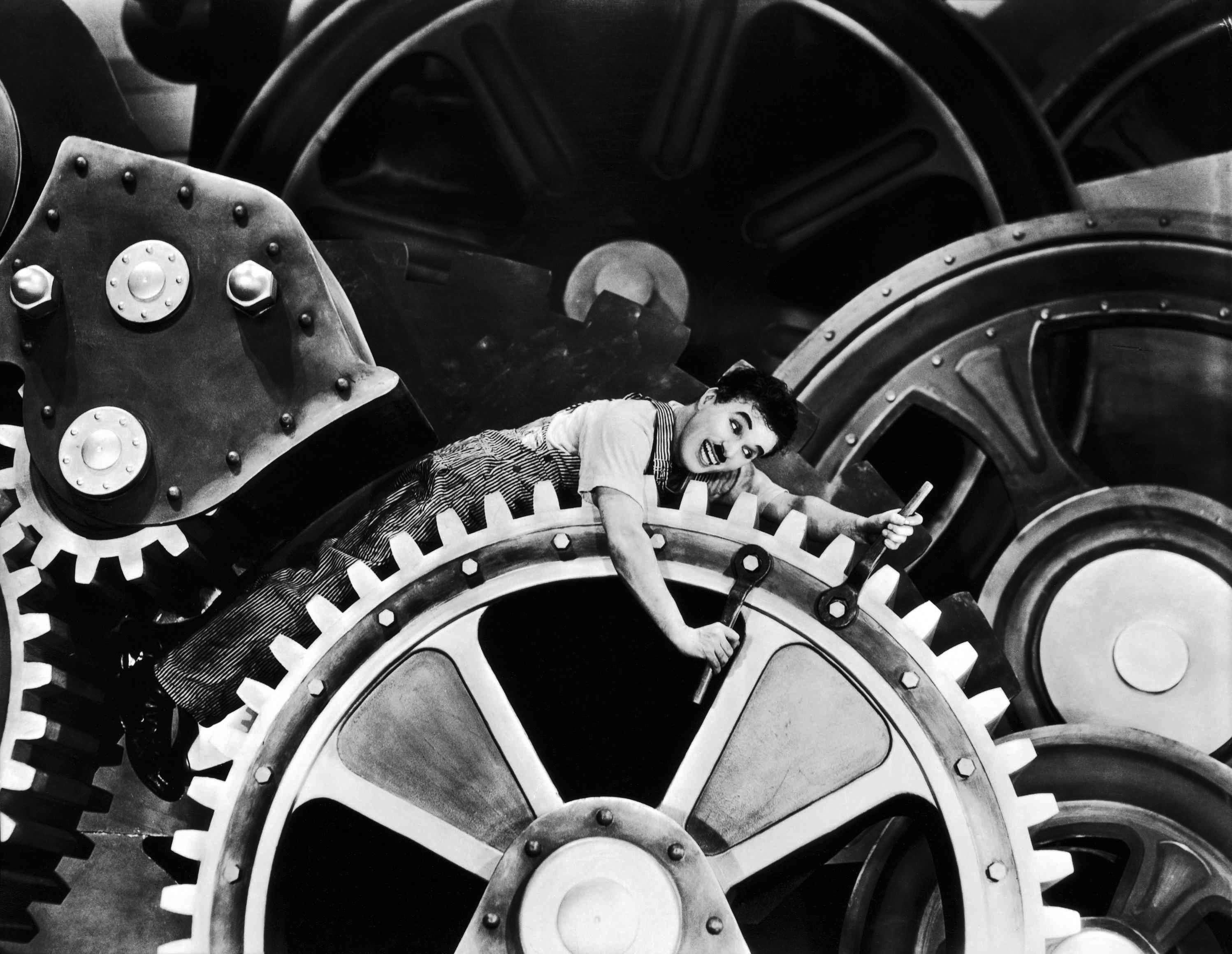
David Leonhardt, an editorial opinion editor at The New York Times, was trying to set up a cage match among three economists: David Autor, Anton Korinek, and Natasha Sarin. But, from my perspective, the important part of the discussion was what wasn’t said.
Leonhardt: Has AI already led to ‘meaningful job loss’?
Autor: ‘The evidence is inconclusive.’
[...]
‘Hiring in these same A.I.-exposed occupations has been sensitive to business cycles and interest rates going back well before the current A.I. era. A.I. may play a role in the recent hiring trends, but it’s quite possible that it does not.’
The last point is repeated by the other two economists.
Autor also hedges, saying slowdown in entry-level jobs in some industries (programming, customer support) but that started in 2022, pre-chatGPT, a sharp rise in Federal Reserve fund rates led to slowdown in hiring, and Trump’s tariffs may also play a role.
Autor: ‘every reason to believe that advancing A.I. will fundamentally change hiring and skill requirements across much of the economy.’
He thinks we will see 1/ fewer people doing the work, 2/ higher skilled workers most likely to remain employed, 3/ we will eventually see that in the data, if we’re not already.
Sarin: ‘there just isn’t evidence in the data [AI hitting jobs] that has happened in a meaningful way so far.’
As Autor said.
Sarin: ‘We don’t see changes in employment in the past few years in the occupations most exposed to AI and those least exposed.’
Sarin is the first to say that tech disruptions create new opportunities: ‘Historically, we’ve had lots of technological disruption, but disruptions also create new opportunities.’
This is a pivot point for people’s concerns: will AI create more jobs than it displaces, and will those jobs pay as well as the ones lost?
Korinek starts by echoing his fellows:
Korinek: ‘employment data so far is ambiguous.’
But then shifts gears:
Korinek: ‘I want to offer a different lens: the investment data.’
He points out that many tech giants are making 100 billion dollar investments in AI, and points out how strange a/ how few people are involved in the actual work of build out these AI platforms, and b/ ‘I’m struck that this huge spending isn’t creating many jobs even at the A.I. companies themselves.’ It’s a massive investment leading to few jobs.
Is the investment in AI a signal or a cause?
Korinek: ‘The employment effects we are looking for may simply be lagging indicators of a transformation that’s already locked in by the capital being deployed.’
In other words, does the level of investment translate into a pile-on that can’t be piled-off? Are the investors injecting suck large sums in the race for artificial general intelligence so it can’t be stopped?
Korinek is the first to state that AI could lead to revolutions in scientific discovery:
Korinek: ‘A.I. may ultimately be beneficial by revolutionizing scientific discovery, health care and human well-being.’
And Korinek is first to raise the issue of labor market disruption, and (implicitly) our lack of preparation for it:
Korinek: ‘We should be preparing now for the possibility of significant labor market disruption, rather than waiting for it to show up conclusively in the statistics.’
Note that he says we should be preparing, but doesn’t specifically advocate regulating AI adoption to lessen the impact of this potentially enormous market disruption. In fact, none of them discusses regulation at all.
Autor jumps in to advance the ‘disruption leads to new opportunities/past is prologue’ argument:
Autor: ‘Look to history. New technologies don’t merely replace labor in existing industries; new technologies create entirely new industries. Centuries ago, there were no automobiles, airplanes or telecommunications, and those industries all employ people.’
But he doesn’t mention telephone operators, Waymo, or autonomous drones in Ukraine, all of which are evidence of disruption ending occupations.
Korinek returns to the investment argument, saying there are a lot of other investors, too:
Korinek: ‘Their success is not guaranteed. They are betting on relationships such as scaling laws, which predict that more computing power will lead to more powerful A.I. systems. So far, they have had a good track record, but we cannot be sure that these relationships will continue to hold.’
He also counters Autor’s ‘past is prologue’ argument:
Korinek: ‘In the past, new technologies have led to rising employment and wages, but we cannot be sure that this will be true in the future.’
Sarin counters the ‘investor lens’ that Korinek teed up:
Sarin: ‘I am not super swayed by the fact the labs are making big bets. If you work at these firms, haven’t you somewhat drunk the Kool-Aid?’
Leonhardt nudges the conversation to confront the elephant in the room:
Leonhardt: ‘You pointed out that technological disruption has never before caused humanity to run out of jobs, despite centuries of Luddite-like worries to the contrary. Can you sketch out a relatively optimistic scenario, in which A.I. is revolutionary but does not create mass unemployment?’
Sarin counters the ‘past is prologue/opportuinities’ argument:
Sarin: ‘This time could be different, and this revolution could reduce the need for labor as a whole. Then maybe the world would shift to some version of the 15-hour workweek John Maynard Keynes famously predicted.’
‘More likely, new jobs will come in, as they have in the past, and will offset jobs that are less necessary in a world where we all have laptops and don’t need typists. There will be winners and losers.’
‘I don’t want to minimize the possible disruption. How well we manage this transition will be the result of choices we make, and it will be important to retrain the work force.’
Sarin is the first economist to suggest retraining as a solution to the labor market disruption caused by AI. Retraining sounds great in theory, but in practice, the history of turning, for example, assembly-line workers and coal miners into computer programmers or marketers has been mixed at best.
Sarin hedges her bets:
Sarin: ‘It is not a foregone conclusion — and it’s not even likely, in my mind — that productivity growth from A.I. will shrink employment overall. If history is any guide, technological progress, even from really revolutionary, life-changing, universally adopted technology, may change the way that we work, but not the fact that we work.’
Yeah, but workers who made $45/hour at Ford wound up working at Home Depot for minimum wage.
Autor takes the discussion in a more productive direction, shifting to the history of industrialization:
Autor: ‘when we worry about the number of jobs, we are worrying about the wrong thing. We should be worried instead about the commodification of human expertise, since expertise is what gives labor its economic value. Without it, many workers may not be able to earn good wages.’
‘In the artisanal era, most goods were handmade by skilled artisans: wagon wheels by wheelwrights, clothing by tailors, shoes by cobblers, timepieces by clockmakers, firearms by blacksmiths. Artisans spent decades mastering their trades, and their expertise was revered. But the value of many forms of artisanal expertise was decimated during the Industrial Revolution of the 18th and 19th centuries, and many artisans themselves never recovered.
Even as innovations spurred a surge in productivity, it was five decades before working-class living standards began to rise. In its initial incarnation, the Industrial Revolution displaced expert work while leaving humans to perform the simple, grueling, inexpert work of feeding what the poet William Blake termed “dark satanic mills.”
Sarin backs Autor’s stance:
Sarin: ‘One fact from Daron Acemoglu and Simon Johnson, the M.I.T. economists and recent Nobel laureates, that I find compelling: Real wages for weavers more than halved in the first two decades of the 1800s.
Leonhardt brings Korinek back into the thread:
Leonhardt: ‘My sense is that this is part of what you fear, Anton — that even if A.I. leads to big overall gains for economic output, it will hurt many more workers than it helps, at least in the medium term. Is that right? And what should we do to reduce that risk?’
This is perhaps the most inflammatory section of the panel.
Korinek: ‘Yes and no.’
‘If A.I. continues to advance only modestly, then the Industrial Revolution-scale disruption that Natasha and David are describing seems quite plausible: there will be a painful transition, but ultimately new jobs will emerge, as they always have.’
But ’If the quest for artificial general intelligence succeeds, we are not looking at another Industrial Revolution. For two centuries, labor has been the scarcest factor in our economy, leading to wages that have risen far above preindustrial levels. Human workers were the bottleneck, and being the bottleneck made us valuable. But if labor itself becomes optional for the economy, that would be very different.’
‘When a machine can do a worker’s job, the worker’s wage eventually falls toward the machine’s cost. Yes, new jobs will emerge as they always do. But the machines will learn them faster and do them more cheaply. The reassuring historical patterns depended on humans being needed to run the economy. Remove that bottleneck, and we are facing something qualitatively different: a permanent shift in who, or what, captures the gains from economic growth.’
‘‘Historically, wages have been the primary mechanism for broadly distributing the benefits of economic growth. We may soon need new mechanisms that decouple income from labor: broad-based capital ownership, universal basic income or approaches we haven’t yet imagined. We need to start building those institutions now.
‘New mechanisms’ suggests — or perhaps demands? — government involvement, but Korinek never makes it explicit, nor does Leonhardt.
I wrote in 2014, in a survey for Pew Research, ‘The central question of 2025 will be: What are people for in a world that does not need their labor, and where only a minority are needed to guide the ‘bot-based economy?’ These economists never position the question that way. Maybe, as economists, they are happier talking about markets than people.
Sarin tries to undermine Korinek’s call for concern about the potential for AI to disrupt the economy:
Sarin: ‘It is less obvious to me than it is to Anton that we should be building new institutions now to deal with the possibility that we’re at the end of the Industrial Age. Maybe that will happen one day. But when? And which jobs are most at risk? And who is going to capture the gains?’
She advocates only for tweaking existing checks, like unemployment insurance and job retraining. No push for regulation or new government policies.
Sarin: ‘I don’t think we are going to be great at predicting what new tools we need in the policy tool kit at a moment when there is so much uncertainty about how A.I. will change the labor market. So rather than fight yesterday’s war without anything like complete information, I’d advocate getting better at learning about what types of workers are being impacted by labor market changes in real time. We could do that, among other ways, by collecting better data about firms are using A.I. and then combining that with jobs data to help us spot labor market displacement as it occurs.’
I will leave the close reading of this panel with the final comments of Autor:
Autor: ‘I agree that A.I. could ultimately undermine labor scarcity. If so, this would be a wrenching societal challenge that I’m not at all sure we’d manage successfully. We should begin to insure against this possibility. Two ideas that my M.I.T. colleague Neil Thompson and I sketch in a recent essay are “Universal Basic Capital” and “Wage Insurance”’
I will leave an analysis of that essay for another time1, since this has already been a long post. At least Autor is making new policy proposals.
The Absence of Regulation or Extra-Market Solutions
The biggest takeaway from this conversation is the absence of any discussion of regulating the use of AI, to protect workers’ jobs and slow the potential devolution of a work-based economy. It’s taken as a given that capital can do what it likes to increase productivity, and that labor has little voice in the unraveling of the industrail, pre-AI economy.
Korinek is the most vocal about this danger, and his paragraphs regarding artificial general intelligence should strike fear in all readers of this post. Korinek explicitly calls for new policies, presumably directed by the federal government: ‘We may soon need new mechanisms that decouple income from labor: broad-based capital ownership, universal basic income or approaches we haven’t yet imagined. We need to start building those institutions now.’
Korinek — and to a lesser extent Autor2 — are saying we can’t leave the outcome of a possible fork in the road toward a post-industrial economy up to the markets.
Remember the weavers in the 1880s, or the US manufacturing base after the first China Shock. And consider that truly general artificial intelligence could have ten times — or a hundred times — the impact on the world of today as the steam engine and industrialization had in the first decades of the industrial age.
