
You cannot overwork your way into being valued. You cannot explain or fight your way into being valued.
| Sara Wachter-Boettcher, Hey designers, they’re gaslighting you
…
Not only is work inherently oppositional, today the stresses of the modern workplace — both white collar work in the office and frontline work in the field, hospital, or factory — are becoming so intense that working people are emotionally withdrawing from their jobs, because, as Wachter-Boettcher points out, you cannot make your bosses value you when they consider workers nothing more than expendable liabilities.
Shift Sulking
When hourly workers begin their day already drained, exhausted, and stressed by the increasing pressures on understaffed teams and by unpredictable schedules, it’s called ‘shift sulking'1. This goes beyond the disengagement typified by the Gen Z stare, deeper into the way the hourly jobs of today are sapping the reserves of hourly workers, especially when coupled with poly-employment2: when workers have to juggle multiple jobs to make ends meet.
As Jennifer Mattson reports:
“[At a time when] 31% of U.S. workers report feeling detached, ‘shift sulking’ is a clear reminder that the strength of our economy is inseparable from the stability of the shift worker,” says [Silvija] Martincevic [CEO of Deputy, a workforce management platform for hourly workers]. “That’s not simply a retention challenge. It’s a productivity challenge that limits our collective potential.”
According to data from Deputy, in states where stable scheduling is the norm, frontline worker happiness reaches 98%, compared to just 60% where it’s unpredictable.
[…]
“We don’t see shift sulking as a temporary issue; it’s the human cost of deeper structural friction in today’s labor market—and all indicators point to it intensifying in 2026,” Martincevic says. “Businesses are operating leaner, asking teams to deliver the same output despite tighter staffing and volatile demand. That pressure falls squarely on the frontline.”
According to Deputy’s Better Together report, while AI can automate tasks and improve visibility, technology alone won’t solve the problem—that demands structural change that gives workers what they want: predictable schedules, balanced workloads, and transparent communication.
And without outside forces pushing for change, we can expect more shift sulking in 2026.
Hybrid in 2026
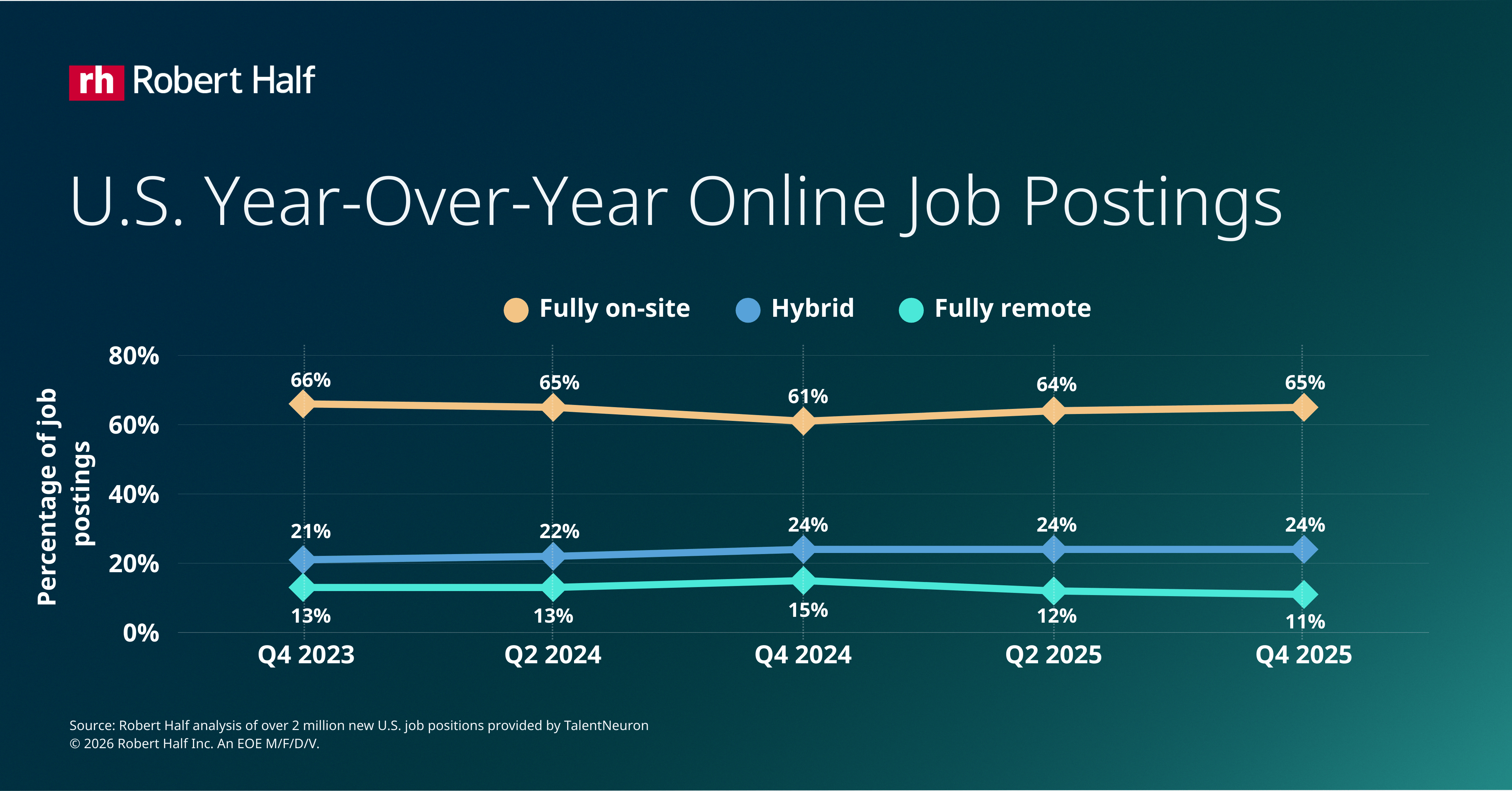
Robert Half’s Demand for Skilled Talent report shows that despite corporate calls for return to the office, hybrid still seems to be with us going forward into 2026, varying by field, seniority, and geography
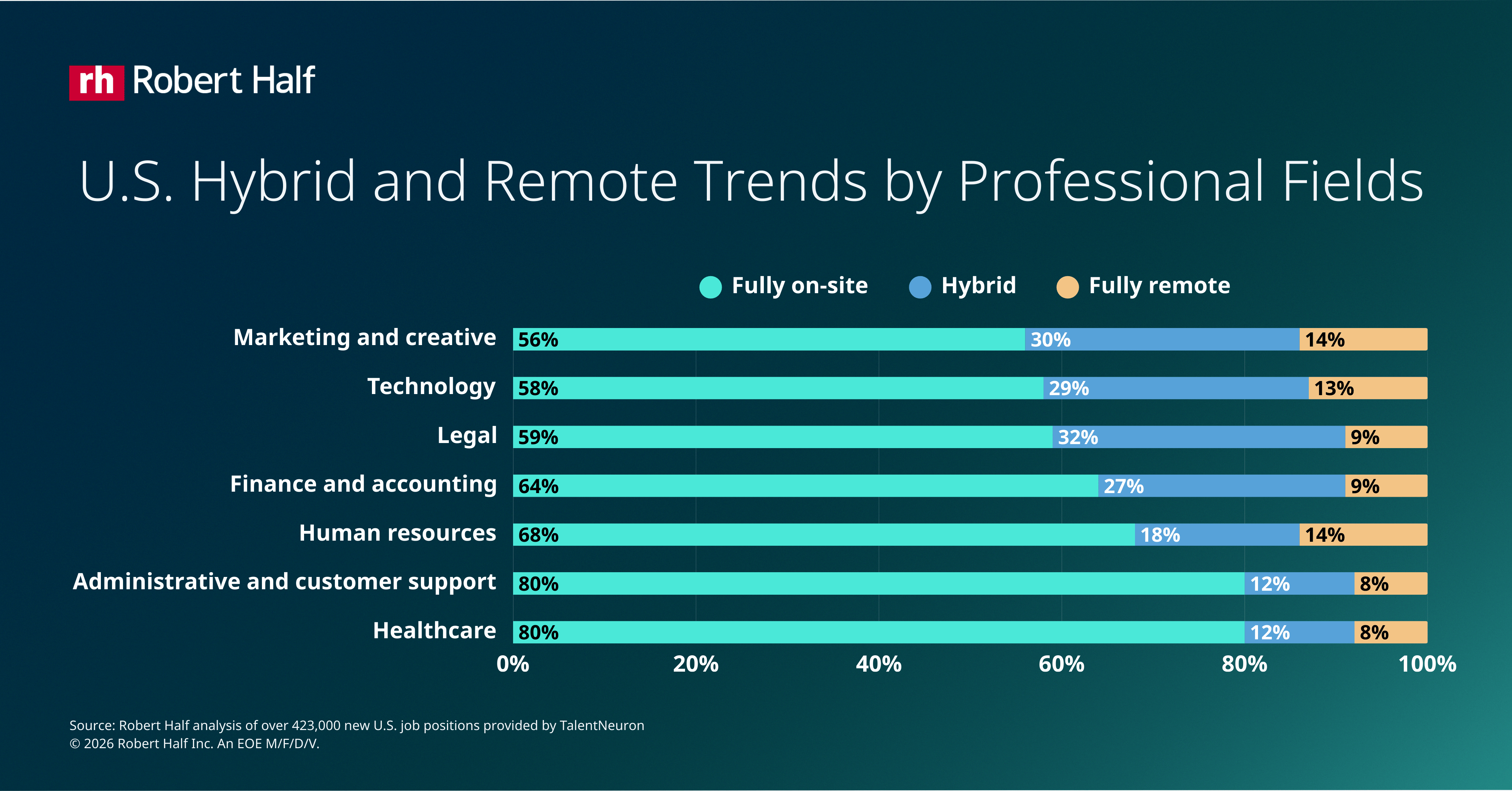
In general, the more experience, the greater autonomy:
Newly created hybrid and remote jobs—by experience level:
Senior-level (5 or more years of experience): 30% hybrid, 13% remote
Mid-level (3-5 years of experience): 25% hybrid, 12% remote
Entry-level (0-2 years of experience): 18% hybrid, 9% remote
Roughly a third of new jobs are hybrid or fully remote:
China and US Converging?
China and the US have been decoupling politically and economically (although we’ll see how long that lasts, post-Trump), but we’re seeing a convergence in population projections. The US population is projected to slowly grow to 400 million by 2100, while China’s population peaks right now, at 1.4 billion and falls precipitously to just about 600 million (like Europe) in the same timeframe (via Our World in Data):
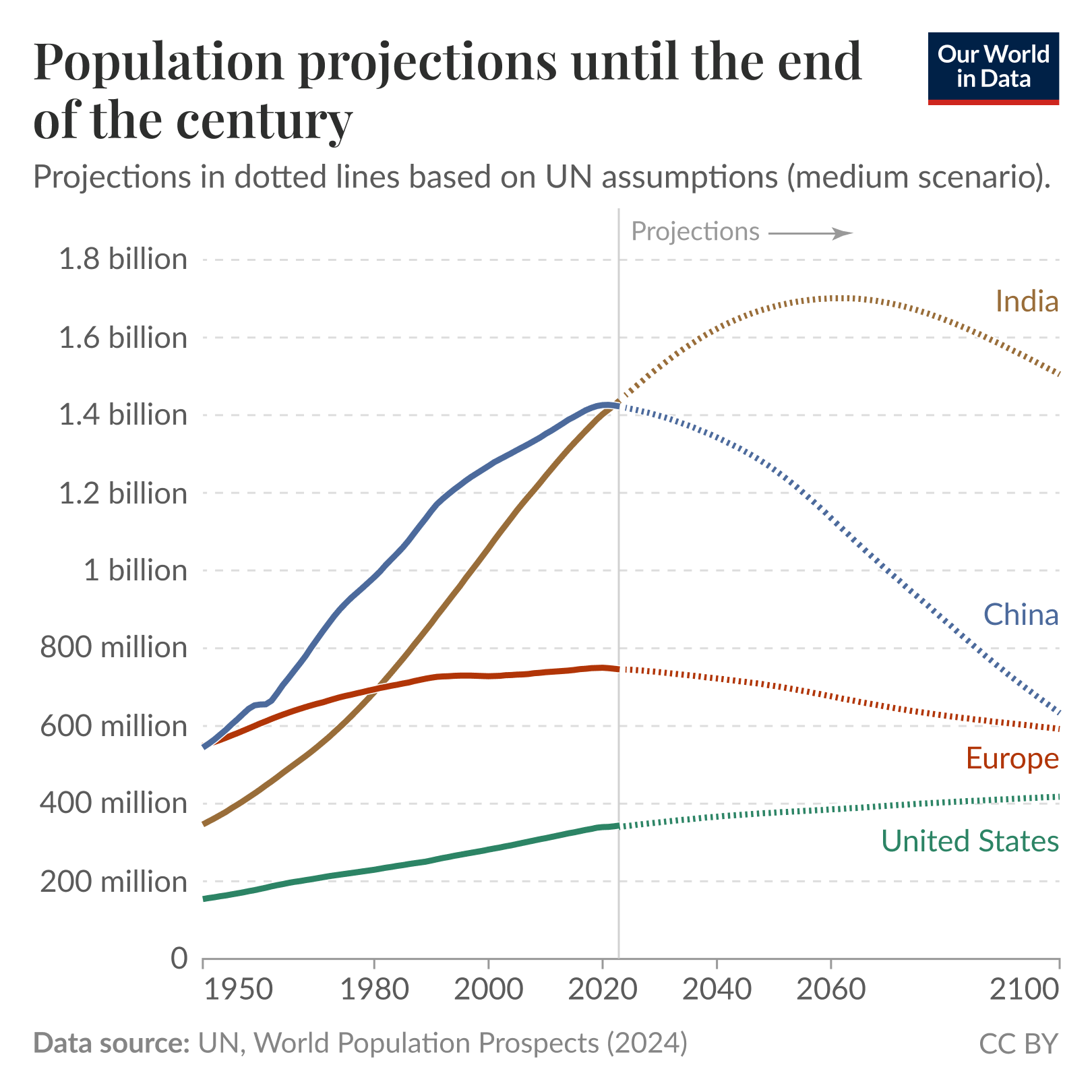
China is going to undergo serious economic and societal changes if this holds.
Note that India’s population has surpassed China’s, but is projected to begin declining around 2060.
